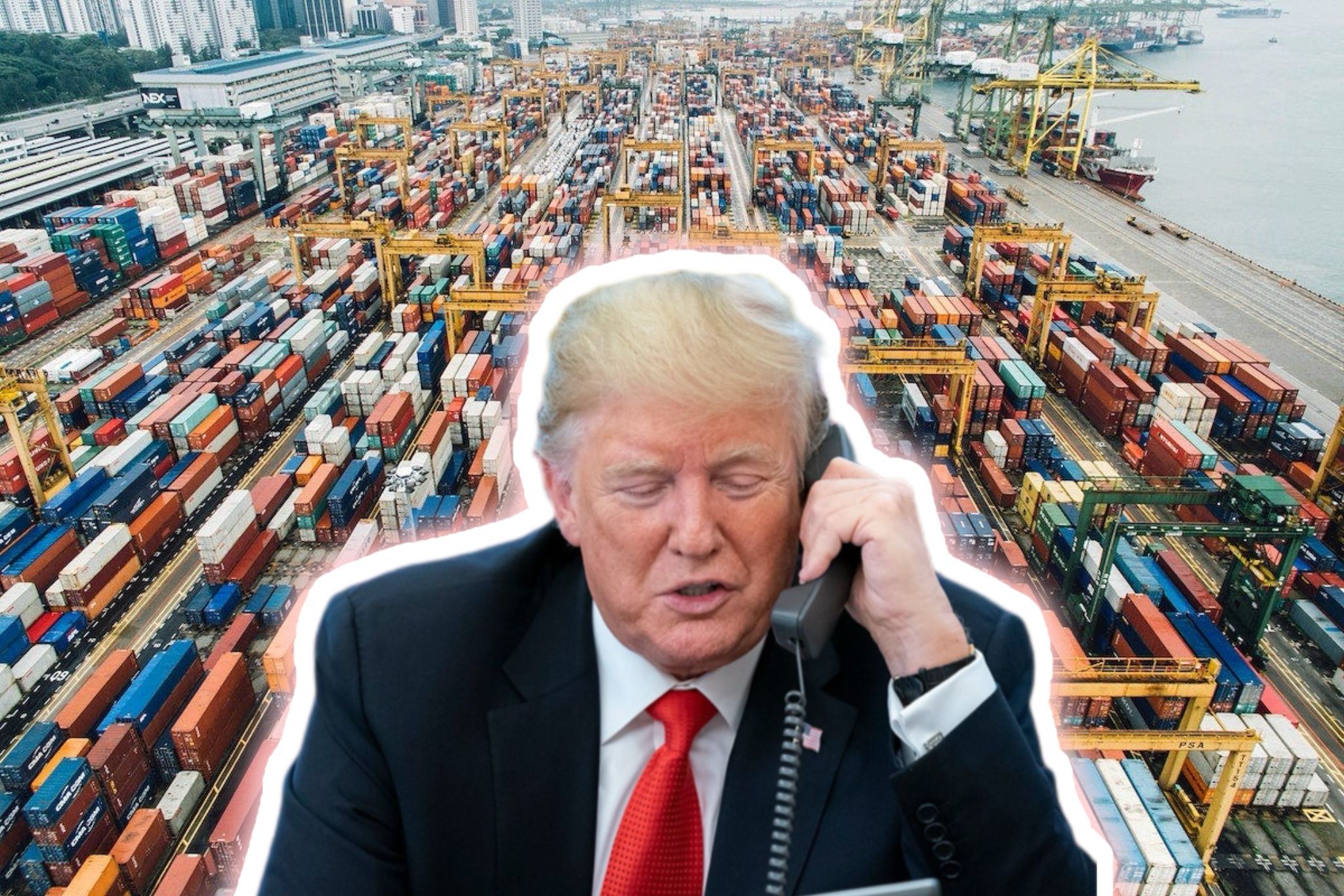
Following President Trump’s 2025 proposals for high tariffs—including a potential 60% tariff on Chinese goods and a 10% universal baseline—many economists have focused on the high risks, such as inflation and trade wars. For a political analyst, however, this policy should be understood differently: it is one of the most effective political messaging tools in modern American politics.
The tariff strategy is not designed to win debates at the Peterson Institute for International Economics; it is designed to win votes in specific counties in Pennsylvania, Michigan, and Wisconsin.
This “economic nationalism” is a direct, unfiltered appeal to a very specific and electorally crucial demographic: blue-collar, non-college-educated, and union-household voters in the post-industrial “Rust Belt.” These are the voters who swung the 2016 election and remain the most contested bloc in American politics.
The political genius of the tariff argument lies in its simplicity. It bypasses complex economic theory and creates a powerful, populist narrative:
It defines a clear villain: “Globalist” elites and foreign competitors (especially China) who “stole” American manufacturing jobs.
It presents a clear hero: A protectionist leader (“I am a tariff man”) willing to fight back on behalf of the “forgotten” American worker.
It offers a clear solution: The tariff itself, a tangible “wall” to protect American industry.
Whether this narrative is economically sound is, politically, almost irrelevant. The message itself—”I am fighting for your job”—is what resonates in communities in Lackawanna County, PA, or Macomb County, MI, which have seen industries decline for decades.
This strategy also places the Democratic party in a difficult political bind. Opposing tariffs allows them to be painted as “pro-China” or part of the “globalist elite” who don’t care about American jobs. This forces them to walk a difficult tightrope, often trying to argue for “smarter” trade enforcement rather than rejecting protectionism outright—a message that lacks the simple, emotional clarity of a high tariff.
Ultimately, the high-tariff policy is a masterclass in political signaling. Its success is not measured in GDP or trade deficits, but in its ability to solidify a candidate’s bond with a critical voting bloc in the handful of states that decide the Electoral College. It is a policy that functions, first and foremost, as a ballot.
在國際政治與經濟交織的角力中,一場由美國掀起的關稅戰爭,正悄悄改變世界格局。這次,我們邀請到現任美國奧克拉荷馬中央大學(University of Central Oklahoma, UCO)經濟學教授 Glenn(Kuang-Chung Hsu),帶領我們從經濟學的視角,深入解析貿易赤字、國債危機與全球供應鏈重組的脈絡。這場訪談,我們試著理解表象之下的真相,也試圖釐清,面對這波波動,應該如何思考。
🎧 完整訪談也可在 Podcast 收聽: EP67|川普的關稅政策錯了嗎?美國經濟學教授從學術角度聊貿易戰 ft. Glenn
這並不是美國第一次以強硬手段解決貿易問題。1985 年,美日貿易緊張之際,美國主導簽訂「廣場協議 Plaza Accord」,迫使日圓升值以降低美國對日貿易逆差。短期內,美國逆差確實收斂,但日本隨後陷入資產泡沫崩潰,經濟停滯長達十年,被稱為「失落的十年」。教授認為,川普的作法幾乎是歷史翻版,卻忽視了當年結局的教訓。
Glenn(Kuang-Chung Hsu) 為美國奧克拉荷馬中央大學(University of Central Oklahoma)經濟學教授,專長領域包括國際貿易、勞動經濟學與能源產業分析。他的研究著重探討全球經濟問題、企業佈局與政府政策間的互動,並著重外包、工資結構與貿易衝突對勞動市場與宏觀經濟的長期影響。Glenn 教授曾多次發表於《Reviews of International Economics, The journal of international trade and economic development, Empirical Economics 、《Applied Economics》、《Energy Economics》等國際期刊。畢業於台灣大學農業經濟碩士,並於德州農工大學(Texas A&M University)取得經濟學博士學位。
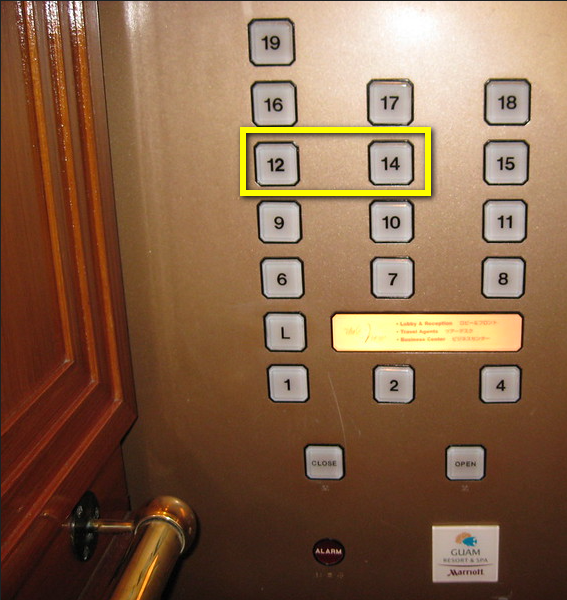
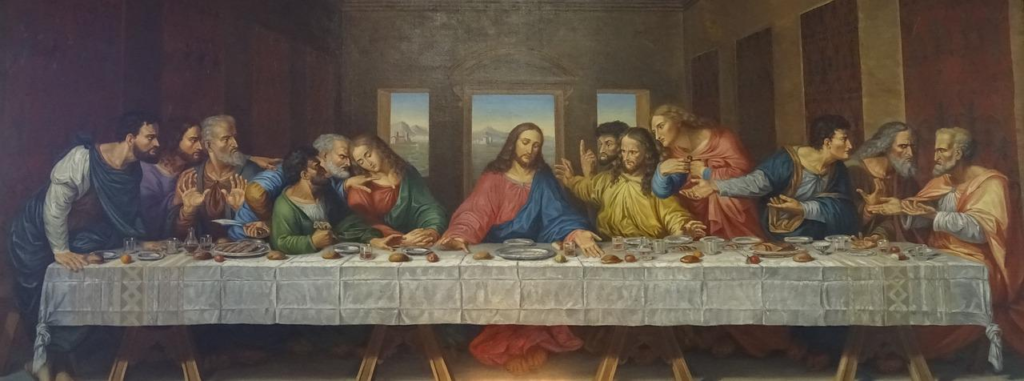
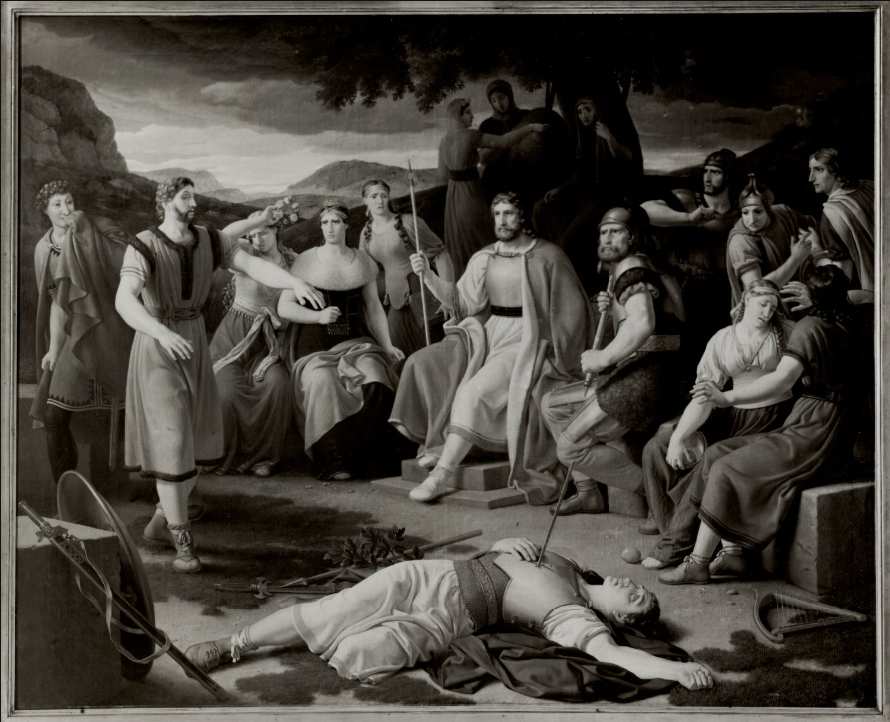
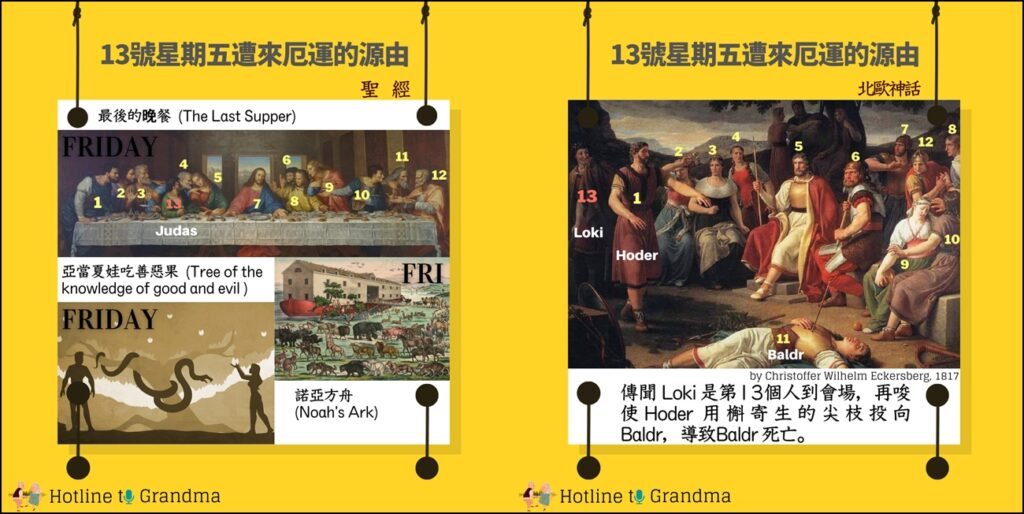
《聖經》記載,耶穌在受難週的週四晚上與門徒共進最後的晚餐(就是達文西名畫《最後的晚餐》的場景)。他當時已預知自己將被出賣,而那位出賣他的門徒就是猶大。13 號星期五的由來也跟《最後的晚餐》有關,猶大是第十三位入席的門徒,也因此「13」成了不吉利的數字。 隔天星期五,耶穌被釘上十字架,這天被稱為「受難日」也就是 Good Friday,而三天後星期日,耶穌復活了。
On its surface, Florida’s Amendment 3 is a straightforward ballot initiative to legalize recreational marijuana. The policy debate is clear, and so is the high legal threshold: it requires 60% support to pass. For an elections analyst, however, the real story is not the policy itself, but its potent, structural impact on the 2024 election.
The initiative’s primary political function is not necessarily legalization, but mobilization.
Florida has trended Republican in recent cycles, making it a difficult state for Democrats at the top of the ticket. The party’s challenge often lies in energizing its base and, crucially, turning out low-propensity voters. Amendment 3 is a powerful tool to solve this exact problem. Support for marijuana legalization polls exceptionally high among Gen Z, Millennials, and progressive-leaning Independents—demographic cohorts that are notoriously difficult to get to the polls.
This creates the critical “spillover effect.” A 22-year-old voter in Miami or Orlando, who might otherwise have skipped the election, may be highly motivated to vote “Yes” on Amendment 3. Once they have their ballot, the political calculus is whether they will also vote “down-ballot” for other Democratic candidates.
While this increased turnout might not be enough to flip the state for Kamala Harris in the presidential race, its true impact will likely be felt in Florida’s closely contested U.S. House races. In an environment where control of the House of Representatives is decided by just a handful of seats, the mobilization of even a few thousand new, left-leaning voters in a key district could be the decisive factor. This transforms the initiative from a policy question into a strategic political weapon.
The 60% threshold makes passage a significant challenge. Governor DeSantis and state Republicans are actively campaigning against it, meaning the measure could very well fail.
Analytically, however, this almost doesn’t matter. Even if Amendment 3 fails to pass (for example, receiving 58% of the vote), it may have already succeeded in its political mission. By being on the ballot, it forces Republicans to spend resources fighting it, and it successfully draws thousands of younger, progressive voters to the polls—voters who likely would have stayed home otherwise.
Ultimately, Amendment 3 is a powerful case study in modern political strategy, demonstrating how ballot initiatives can be used to bypass a legislature and, more importantly, reshape the electorate for a specific election. This is a tactic that will undoubtedly be refined and redeployed in future election cycles.
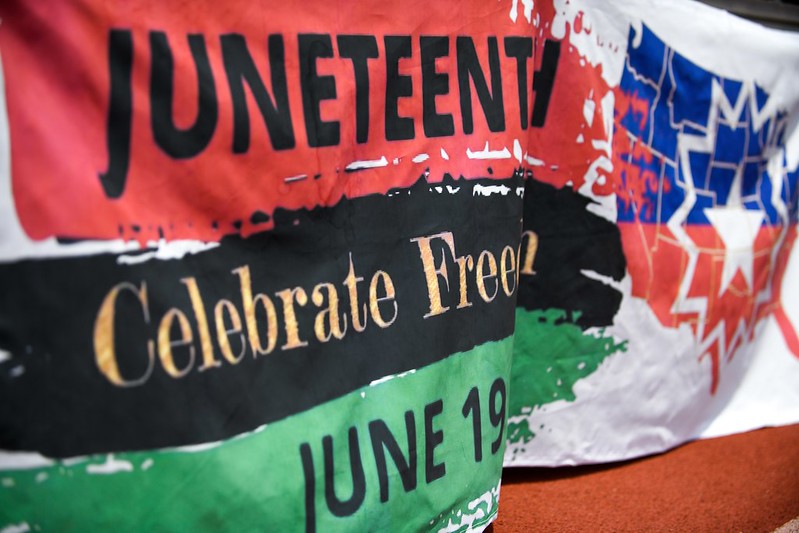
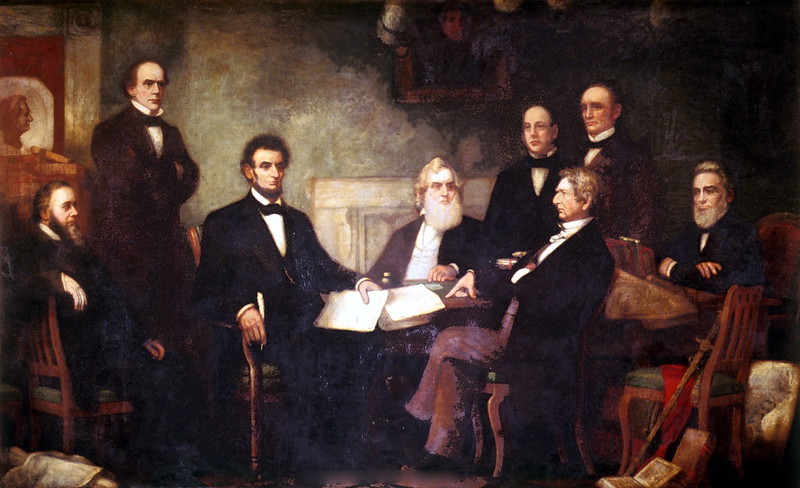
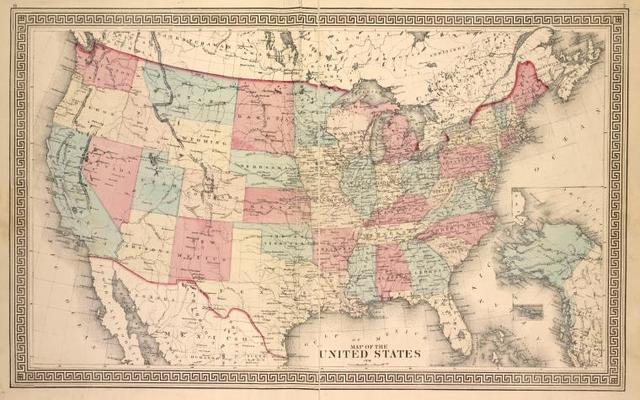
美國南北內戰 1861 年到 1865 年,當時北邊州主張解放黑奴,組織了北方合眾國 United States of America,合力往南邊打,南邊州的聯盟國稱為 Confederate States of America,當時成為總統林肯(Abraham Lincoln)於 1862 年 9 月 22 日宣布了《解放奴隸宣言》(Emancipation Proclamation)1863 年生效,雖然南方蓄奴州並不歸聯邦政府管轄,也開始陸續投降,然而德州地理位置獨立,並沒有成為戰場,許多人帶著他們的奴隸從東部各州移民到德州來逃避戰爭。德州則成為最後一個向北方合眾國(United States of America)投降的南部州,也是美國黑奴最後獲得自由的地方。
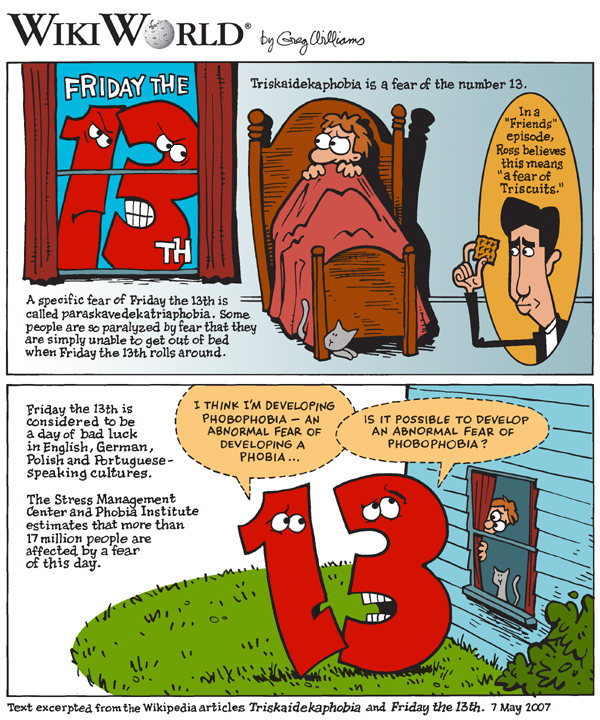
Happy Friday! TGIF! 我們有一堆詞彙一堆開心興奮的情緒在星期五,因為這是迎接周末來臨的一天。但是,有一個星期五常常令人擔心害怕,尤其在歐美地區更是迷信這件事,這個星期五就是13號星期五(Friday the 13th),英文也稱 Black Friday 黑色星期五, 此黑非購物黑,是不幸運的黑。
最後,我來介紹這個有趣的超長單字 paraskevidekatriaphobia 源於希臘文,我們可以把他拆開解釋,paraskevi-deka-tria-phobia,paraskeví 是禮拜五的意思,dekatre是13(deka就是10,tris就是3),恐懼症就是phobia,維基百科解釋 a phobia is a type of anxiety disorder,恐懼症就是一種焦慮症。
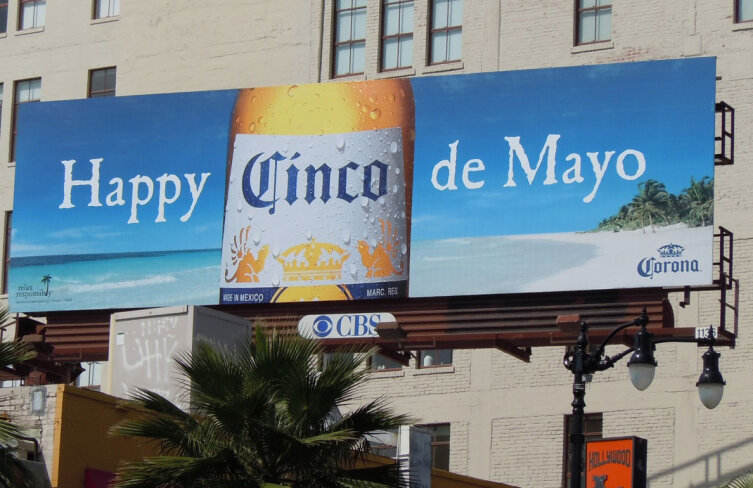
說到五月,大家最常想到的就是勞動節、母親節,我呢還會想到外婆的生日跟外公外婆結婚紀念周年。但,今天 5 月 5 日一早到公司,同事 J 跟我說 Happy Cinco De Mayo,嗯?其實我知道今天是這個日子,因為來公司前我看了 Google 行事曆確認工作時程時我有看到它被 Google 自動列為節日。這究竟是什麼樣的節日呢?
Cinco De Mayo 是西班牙文的「五月五日」,它是一個屬於墨西哥地方性的節日,特別的是在美國的墨西哥人很喜歡慶祝,截至2019年,美國墨西哥裔占 11.3%,這個節日到來,他們總會以此懷念家鄉。慶祝活動常常是吃吃喝喝,喝酒(墨西哥人喜歡喝酒,美國人也喜歡喝酒XD),很多酒商也會藉此節宣傳一波促銷。他們也會穿上傳統服裝唱歌跳舞,開啟小小的嘉年華。
等待鐵達尼號上的美乃滋 沈船後成國殤
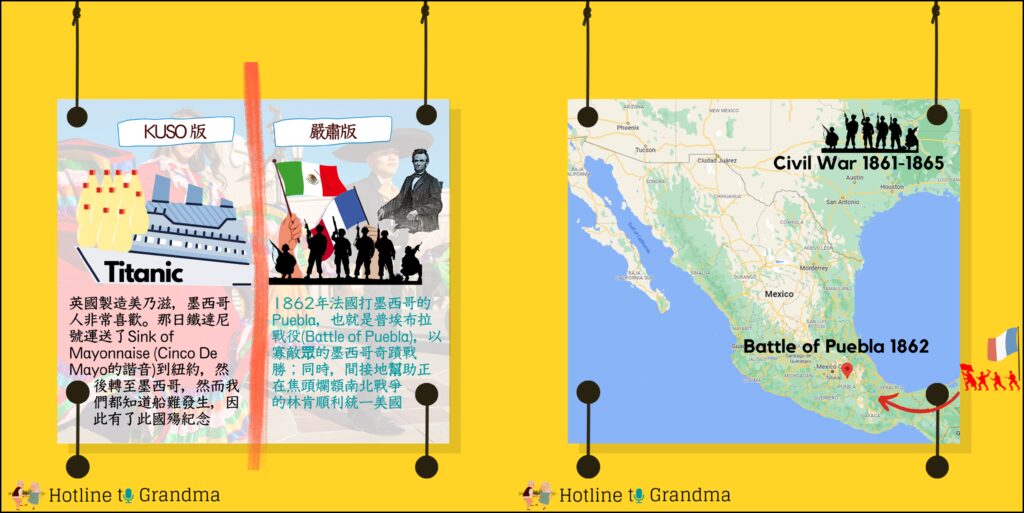
為什麼會有這個節日呢,這要說到以前英國… 以前據說 Hellmann 這個牌子的美乃滋(mayonnaise)產自英國,當時風靡了整個墨西哥,但是因為英國人不願意透漏怎麼做它,因此只能靠海運的方式運送。1912年鐵達尼號開航,墨西哥訂了一大批 12,000 罐美乃滋,這批預計先到紐約在抵達目的地,他們等待著,結果大家都知道鐵達尼號撞到冰山沉了,而美乃滋也全部到海底。墨西哥人本來很興奮期待地載歌載舞等著美乃滋到來,結果沈船消息傳開,全國非常傷心,因此為了紀念這個國殤,在五月五日訂下了此節日 Cinco De Mayo ( sink of mayonnaise,辛口的麻油)
好吧,看到這邊大家有沒有覺得蛤,真的假的?假的。真的歷史故事在這裡…
墨西哥Puebla戰役勇猛擊退法軍 南北戰爭間接順利結束
其實這一天是為了紀念墨西哥在 1862 年以寡敵眾打敗法軍的普埃布拉戰役(Battle of Puebla)。
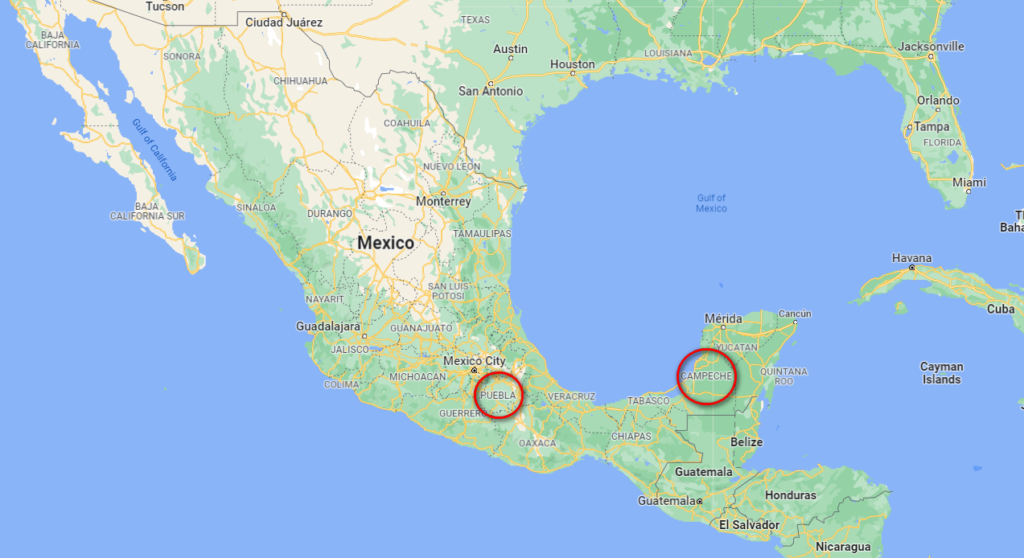
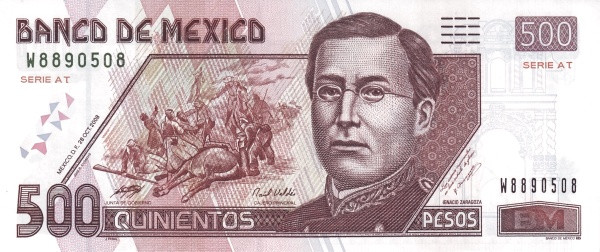
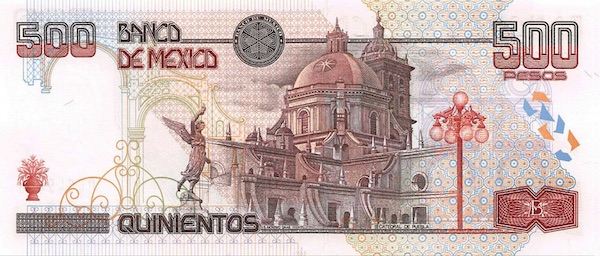
1862年2月底,法軍佔領了墨西哥坎佩切城(Campeche),一路打,到了當年 5 月 5 日,法軍逼進了今天墨西哥普埃布拉州的首府普埃布拉,墨西哥 Ignacio Zaragoza 將軍率領了一支4000人的墨西哥軍隊在普埃布拉擊敗了8,000人的法軍,當時其實法國有很多先進的武器,也是全世界認為擁有最強大軍隊的國家之一,而墨西哥軍隊卻靠著落後的武器誓死抵抗殺出重圍,贏得了暫時的勝利。這就是普埃布拉戰役(Battle of Puebla),為了頌揚這個克服阻礙的日子,才有了 Cinco De Mayo 。很酷的是 Ignacio Zaragoza 成為墨西哥500元的其中一名英雄(他們 500 元有很多種,這將軍是其中一種),據說現在沒有很容易看到,如果你幸運地拿到,記得收藏起來之後說不定還可以賣一個好價錢。
郡縣是州政府的下屬行政機構,有從屬關係;城市則是人民自發成立的運營機構(同時也稱爲自治行政體 municipality),與州沒有從屬關係,但是部分工作重叠。所有郡縣的面積等於州的面積,城市的面積則一定小於州的面積。簡單地說其實有很多地方沒有城市管轄,少部分一群認爲自己很重要的人們創造了城市,例如紐約市,而普遍居民多散落於不同的 county, parish or borough。
議會有點小複雜,因爲不同的州,他們稱呼的名字並不相同,我同事常常說東邊人最多事一直用不同的名字,不過經過我的觀察不是只有東邊人這樣,多事人不分東西lol,上院都相同,稱參議院(State Senate);但下院就不一定,41個州的下院稱爲衆議院(State House of Representative),3個州稱爲為代表院(House of Delegates),5個州稱立法大會(Assembly)。任期多爲2-4年。都為民選。
House of Delegates – Virginia、West Virginia、Maryland
Assembly– California State Assembly、New York State Assembly、Wisconsin State Assembly、Nevada State Assembly、New Jersey General Assembly
各州議員稱參議員(State Senator)以及眾議員 (State House of Representative),人數依各州大小比例而定,我們在説的時候多會在前面加上州名,例如Texas State Senate, California State Senate, Texas House of Representatives, California House of Representatives…,避免和聯邦的眾參議員搞混。
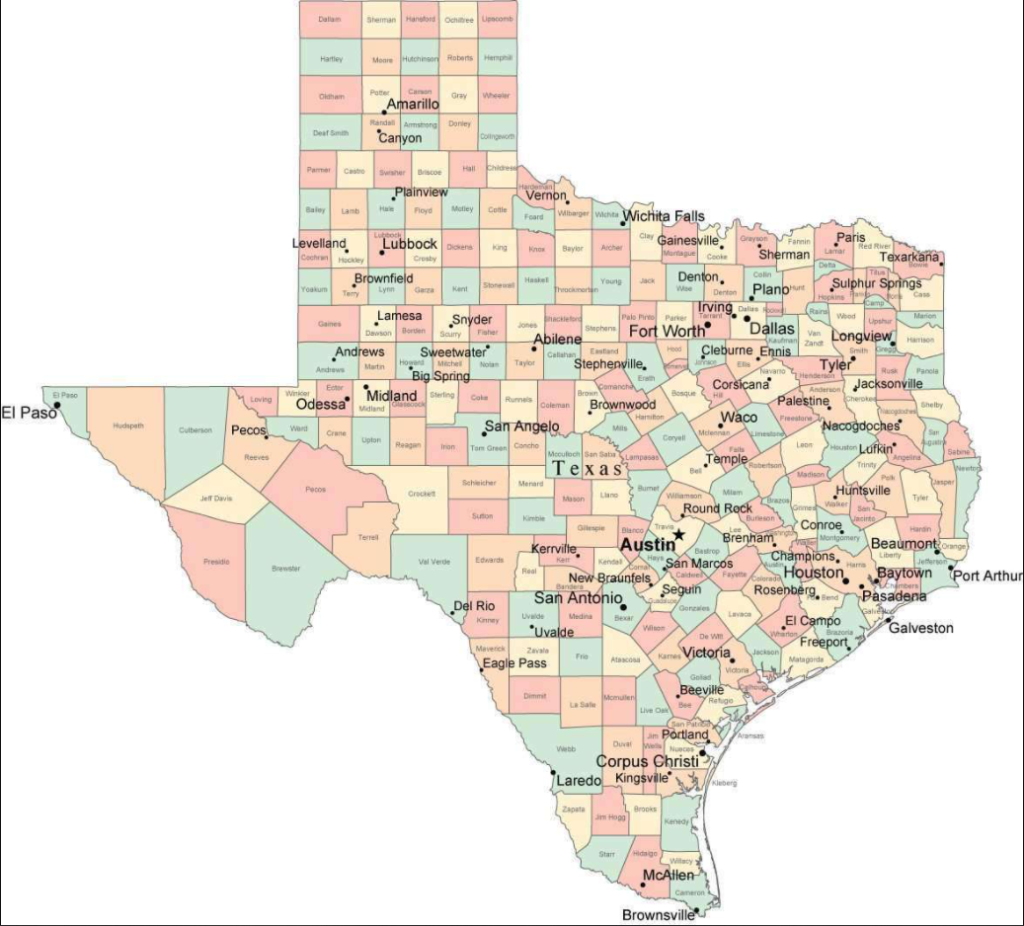
Texas有31個Texas State Senate,150個Texas House of Representatives。They work in Texas State Legislature.
California 有40個California State Senate,80個California State Assembly。They work in California State Legislature.
參議院(State Senate)&衆議院(state House of Representatives)\代表院(House of Delegates)\立法大會(Assembly)
NA
司法
最高法院(The Supreme Court)&下級聯邦法院
最高法院(state supreme court)或稱上訴法院(court of appeals)&下級法院
NA
美國政府組織架構
這篇文章你主要會先瞭解:
美國政體
美國聯邦
行政 – 總統、行政部門15部、多個專門機構以及聯邦管理機構
立法 – 參議院&衆議院
司法 – 最高法院&下級聯邦法院
美國政體 – 憲政聯邦共和制
美國建國之後實行憲政聯邦共和制(Constitutional federal republic) ,憲法是國家最高的法律,聯邦爲一個全國政府,由50州的代表組成。雖然有一個全國政府,但是各個州政府的權威很大,他們能擁有自己的法律、自己的政策,只要不違反聯邦憲法,都是由各州自行掌握,例如今天在這州合法買大麻、持槍,搭飛機到另一個州時就要注意有沒有違法了。
農業部 ( Department of Agriculture ) 、商務部 ( Department of Commerce ) 、國防部 ( Department of Defense ) 、教育部 ( Department of Education ) 、能源部 ( Department of Energy ) 、衛生與公眾服務部 ( Department of Health and Human Services ) 、國土安全部 ( Department of Homeland Security ) 、住房與城市發展部 ( Department of Housing and Urban Development ) 、內政部 ( Department of the Interior ) 、司法部 ( Department of Justice ) 、勞工部 ( Department of Labor ) 、國務院 ( Department of State ) 、運輸部 ( Department of Transportation ) 、財政部 ( Department of the Treasury ) 、退伍軍人事務部 (Department of Veterans Affairs )
其他專門機構例如我們老在美劇看到的FBI(Federal Bureau of Investigation),其他就像美國郵政管理局 ( U.S. Postal Service ) 、國家航空和航天局 ( National Aeronautics and Space Administration ) 等等。
另外由國會授權的行政機構為聯邦管理機構,其權力相當大,負責制定和執行管理某一經濟領域的規章。主要有證券交易委員會 ( Securities and Exchange Commission)、聯邦貿易委員會 ( Federal Trade Commission)、核管理委員會 (Nuclear Regulatory Commission)、食品和藥物管理局 ( Food and Drug Administration,屬衛生與公眾服務部)、聯邦電訊委員會 (Federal Communications Commission)、環境保護署 ( Environmental Protection Agency)、平等就業機會委員會( Equal Employment Opportunity Commission)、職業安全與健康管理局 ( Occupational Safety and Health Administration,屬勞工部) 以及聯邦儲蓄系統 (Federal Reserve System)等。聯邦儲蓄系統也就是國家中央銀行(簡稱美聯儲),是相當重要的單位,他們負責制定國家貨幣政策、確定利率以及貨幣供應量。換句話説他們影響著美國的經濟、利率、通貨膨脹、就業率、國際貿易。
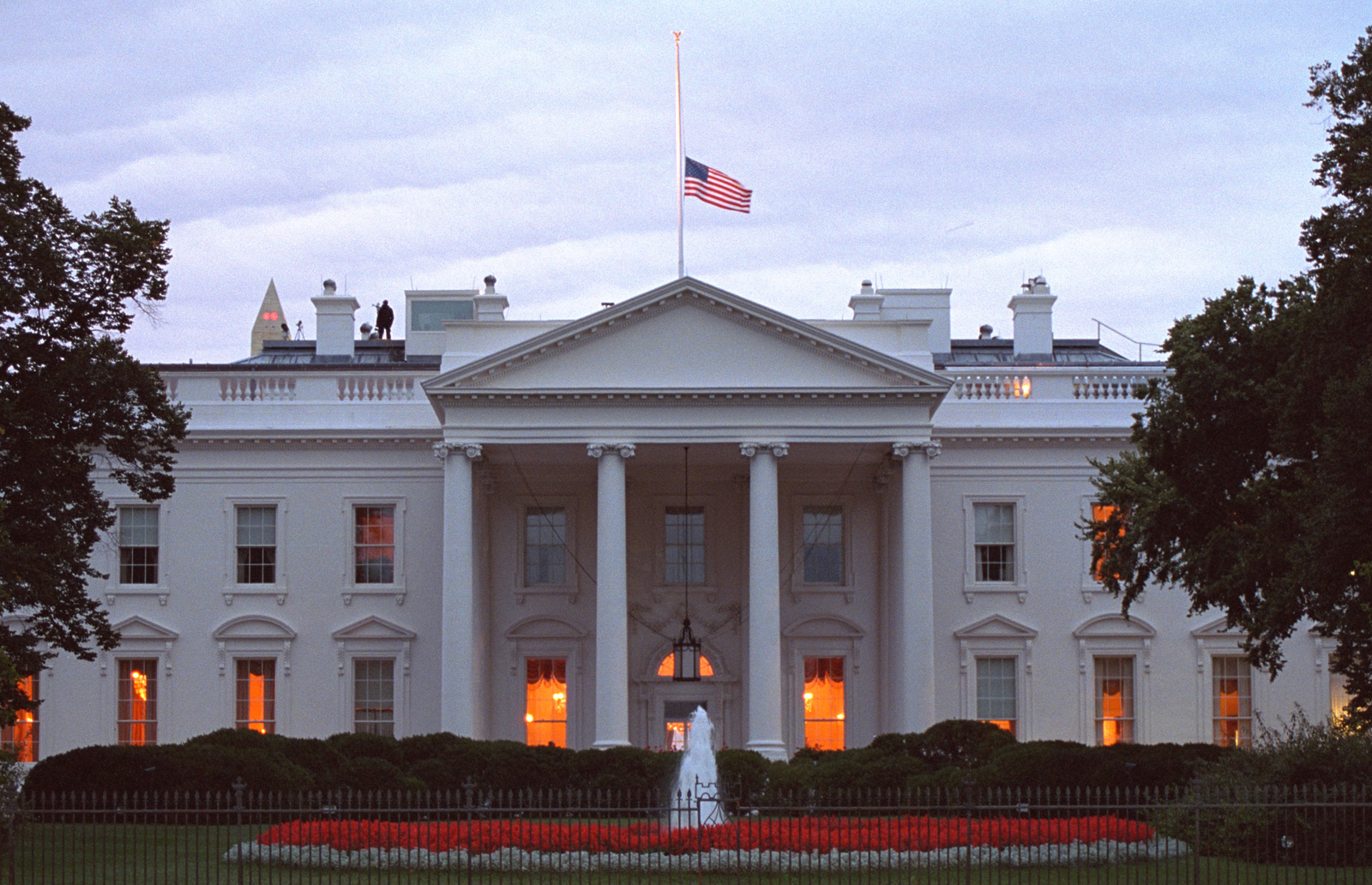
白宮(White house)總統住所
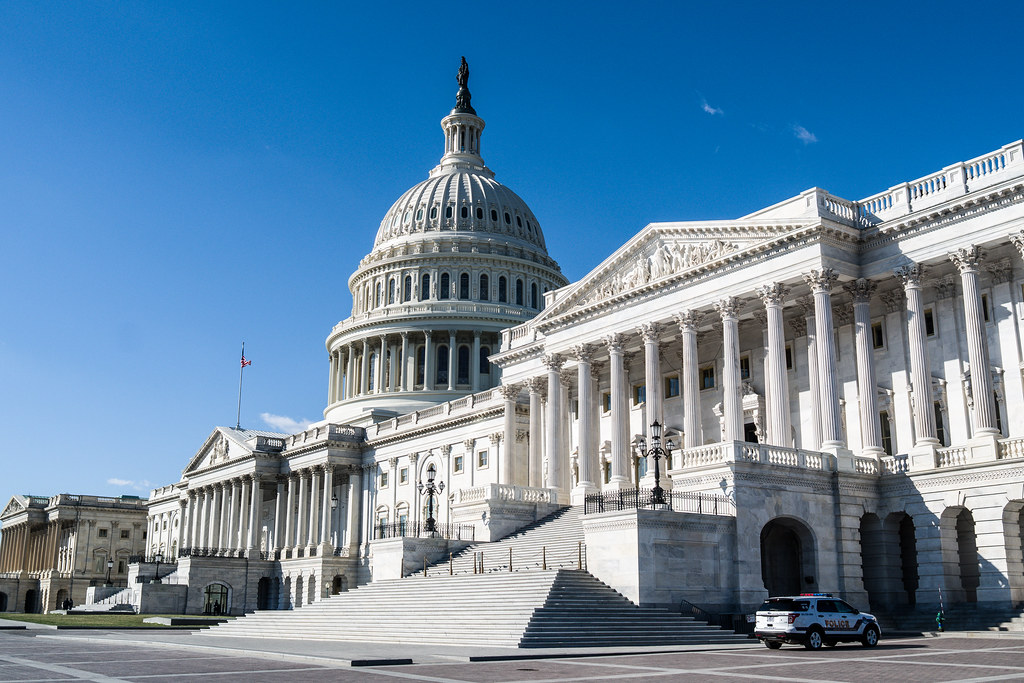
立法分支為國會兩院組成,參議院(US Senate)& 衆議院(US House of Representatives)
衆議院(US House of Representatives),又稱下議院(Lower house),也稱民衆的議院。各州議員人數按照各州人口比例,共有435名。所有衆議院的任期為兩年,無連任限制,所有衆議院的選舉同時舉行。選舉的地理區域劃分為按照每個州的國會選區(Congressional District)選出。
司法分支有最高法院和下級聯邦法院組成,其中包括上訴法院(亦稱巡迴法院,Courts of Appeal, or Circuit Courts, or Appellate Courts)、聯邦地區法院(federal district courts),破產法院(bankruptcy courts),以及聯邦索陪法院(courts of federal claims)。