美國眾議院微弱多數與2026年的關鍵賭注
A Razor-Thin Majority and the Stakes for 2026
In the wake of the 2024 election, the political map of the U.S. House of Representatives has never looked so fragile. With the Republican party holding a razor-thin majority of roughly 220 seats to 215, the battle for the 2026 midterms has, in effect, already begun. The most decisive engagements in this war, however, are not being fought at campaign rallies but in state courtrooms and closed-door legislative sessions.
在2024年選舉之後,美國眾議院的政治版圖相當脆弱。共和黨僅以約220比215的微弱多數掌控眾議院,實際上,爭奪2026年中期選舉的戰役已經悄然展開。
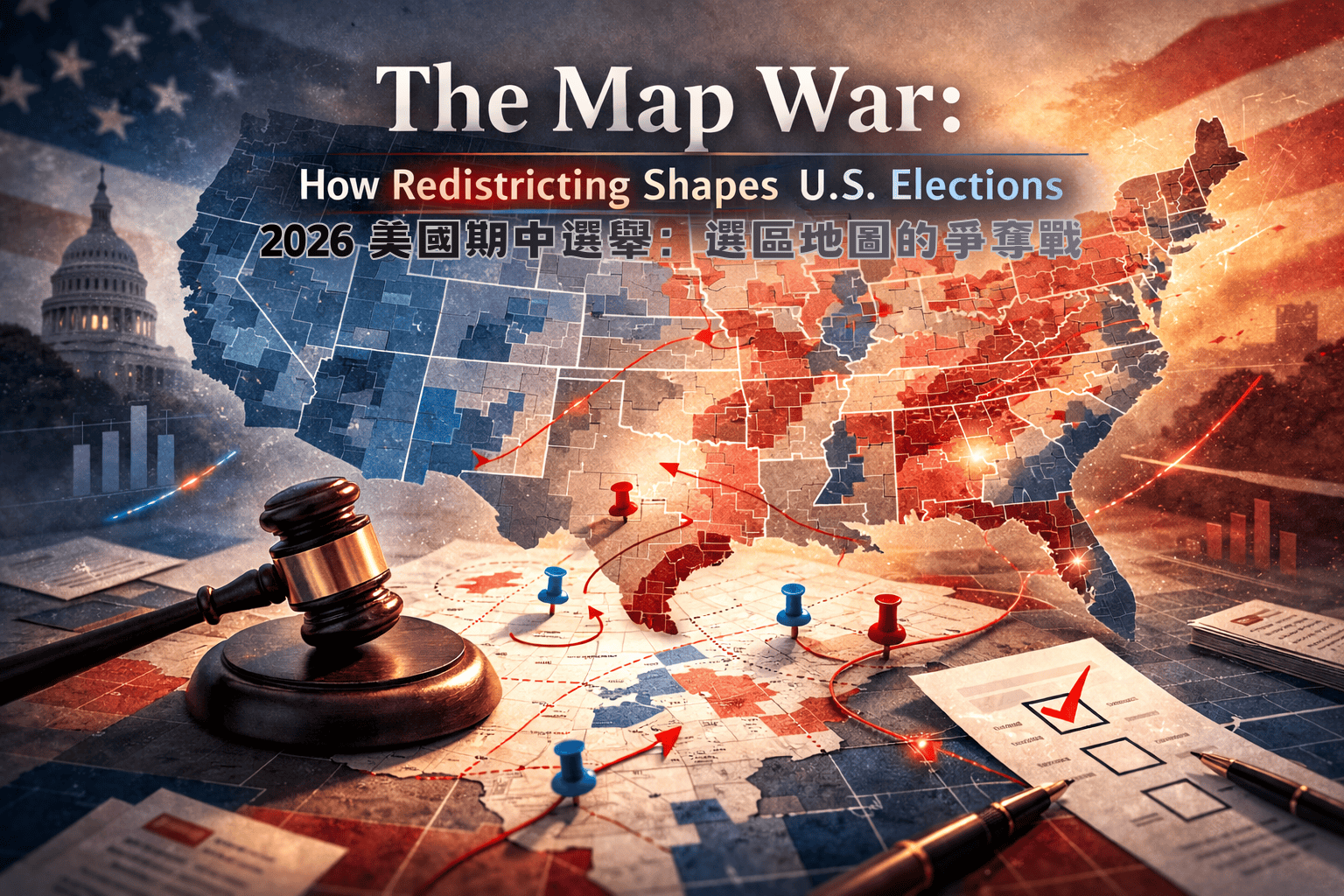
地圖之戰:黨派重新劃區成為政治武器
The Map War: Partisan Redistricting as a Weapon
The trend I am watching closely is the growing weaponization of partisan, mid-decade redistricting in the fight for House control.
Traditionally, congressional maps are drawn once after the decennial census (most recently in 2020) and remain fixed for the next ten years. But the near-tie of the 2022 election results has changed the game. With every single seat capable of deciding the majority, both parties are now aggressively litigating to force favorable maps into place before the 2026 election.
我關注的趨勢是黨派以十年中期重新劃區為利器,作為爭奪眾議院控制權的工具。傳統上,國會選區地圖每十年一次繪製(最近一次是在2020年),並在接下來十年保持固定。但2022年選舉結果的接近平手改變了遊戲規則。由於每個席位都有可能決定多數黨,兩黨都在積極進行訴訟,試圖在2026年選舉前確保對自己有利的選區地圖。
州內戰鬥與黨內矛盾
State Battles and Internal Party Friction
This “map war” is playing out across the country. In New York, Democrats are litigating to gain several seats. In North Carolina and Ohio, Republicans are working to solidify their own gerrymanders. Federal courts have forced redraws in Alabama and Louisiana. This battle is also creating internal party friction: in states Democrats control, like Maryland and Illinois, national leaders are pushing for aggressive new maps, while some state officials are resisting, fearing the high legal and political risks.
這場「地圖之戰」正在全美各地展開。在紐約,民主黨正訴訟爭取增加數個席位;在北卡羅來納與俄亥俄,共和黨正努力鞏固自己的選區劃分。聯邦法院已迫使阿拉巴馬與路易斯安那重新繪製選區。這場戰鬥也引發了黨內矛盾:在民主黨掌控的州,如馬里蘭與伊利諾州,全國黨部推動激進的新地圖,但部分州官員則因擔憂法律與政治風險而抵制。
安全選區、初選與選民影響力
Safe Districts, Primaries, and Voter Power
As seen in states like Texas and California, the party in control of state government often uses that power to draw lines that maximize its own advantage. The direct consequence of this “map game” is that it hollows out the meaning of the November general election.
This exacerbates a related trend: the transfer of political power to party primaries. When a district is gerrymandered to be “safe” (e.g., R+20 or D+20), the general election becomes a rubber stamp. The only election that truly matters is the primary. This explains why the debate over “open” versus “closed” primaries has become so intense; as gerrymandering makes the general election irrelevant, the rules of the primary become the only rules that matter.
Looking ahead to 2026, the outcomes of many elections may be decided by lawyers, judges, and map-makers long before the first vote is cast. This structural manipulation not only fuels political polarization—as candidates only need to appeal to their party’s most animated primary voters—but it also raises fundamental questions about whether a voter’s power is truly being counted.
正如德州與加州所見,掌控州政府的政黨往往利用權力繪製選區,以最大化自身優勢。「地圖遊戲」的直接後果是削弱了十一月大選的意義。當選區被劃為「安全區」(例如 R+20 或 D+20),大選變得形同虛設,真正關鍵的選舉是初選。這也解釋了為何「開放初選」與「封閉初選」的爭論如此激烈:隨著操縱選區使大選失去意義,初選規則成為重要的規則。
展望2026年,許多選舉結果可能在開始投票前就已由律師、法官與地圖規劃者決定。這種結構性操作加劇政治極端化——候選人只需迎合黨內最活躍的初選選民——也提出了根本性問題:選民的投票是否真正落實在選舉結果?
相關 podcast🎙
EP59 | 百頁選舉公報和七頁選票,直擊美國選舉一起投票去 ft. Yi姐
短影片 | 希望美國總統候選人解決什麼問題
EP57 | 美國政治腐敗三重奏:任期、遊說與投資
EP55 | 我的選票不給總統給誰 美國選舉人團是什麼
EP48 | 美國初選超級星期二:現場拉票舉手投票奇觀與川普選票除名之謎
EP17 | 選舉番外篇- 年糕上班到凌晨的神祕工作 政治&市場民調數據分析

